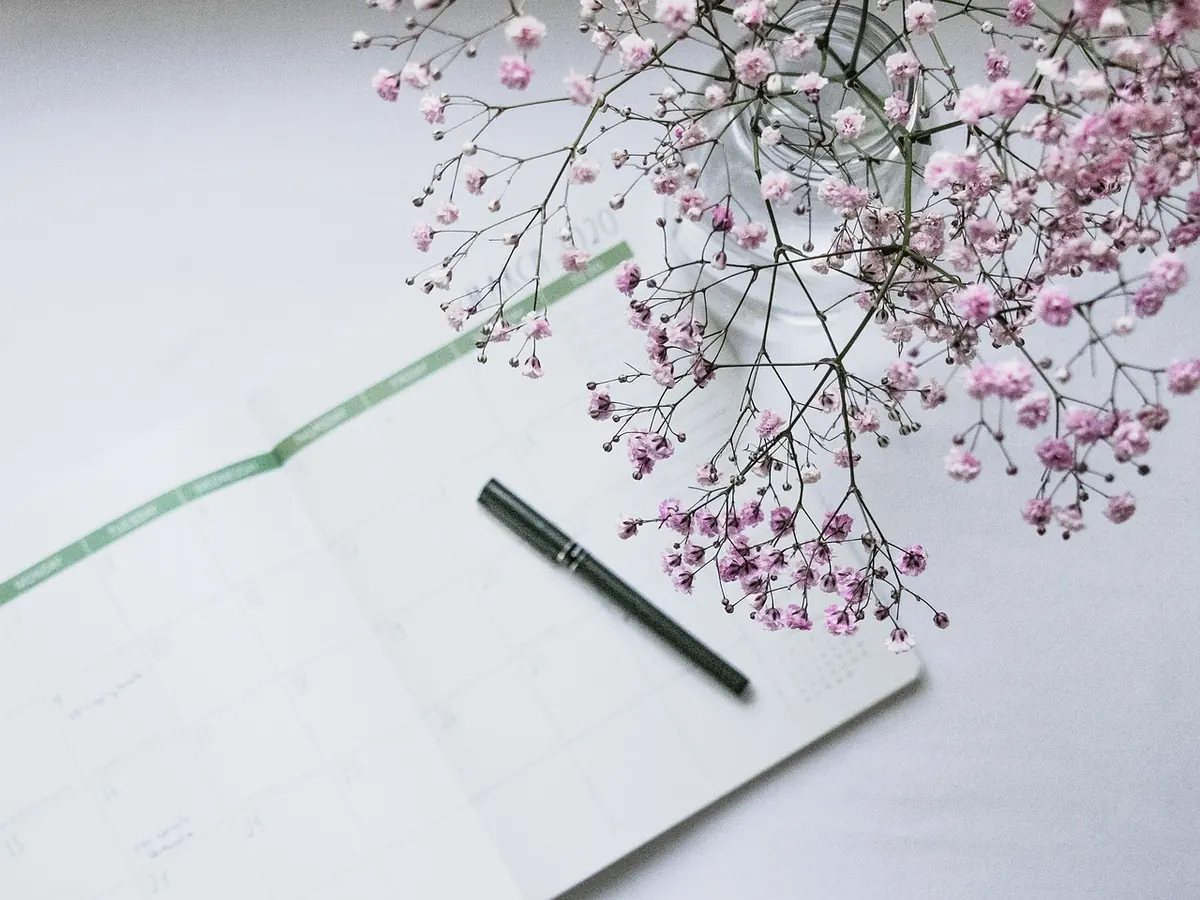


The Seasonal Journal Reset: 12 Prompts for Each New Season
A seasonal set of journal prompts — twelve for spring, summer, autumn and winter — to help you reflect, reset your goals, and notice what changes across the year.

Most resolutions are made in January, on a date chosen by the calendar rather than by anything you can actually feel. Then they sit there, quietly, for eleven months. A seasonal reset works differently: four checkpoints a year, spaced by weather instead of willpower, each one asking the same pair of questions. What has changed? What do I want next?
What follows is a full year of prompts — twelve for each season — plus a short ritual for using them. You do not need to answer all forty-eight. Nobody should. The point is to have something worth reaching for when the light shifts and you notice, again, that you are a slightly different person than you were three months ago.
Before You Start: A Small Ritual, Not a Big Project
A seasonal reset takes about twenty minutes and one page. That is the whole commitment. Spread it across a Sunday morning if you like, but resist the urge to turn it into a project with tabs and coloured pens. The pages you return to are usually the plain ones.
- Read the last season's page first. Even if it is three lines long. Even if it makes you wince.
- Choose three or four prompts, not twelve. Twelve answers in one sitting produce twelve shallow answers.
- Give the page a headline. Before you write anything else, sum up the season in a line — "the season I stopped apologising" or "the season of too many Tuesdays". The headline becomes a handle you can grab later.
- Set a timer for twenty minutes and stop when it rings, even mid-sentence. Unfinished thoughts are easier to return to than polished ones.
- Close with one sentence for the next season. A question, a hope, a warning. It will be the first thing you read at the next turn.
If a prompt stirs nothing, skip it and move on. A journal that feels like homework gets abandoned by February.
Spring: Prompts for Beginnings
Spring is generous with beginnings and stingy with maintenance. Everything looks possible in April, which is exactly why the useful questions here are about what you will actually tend. Write these in the morning if you can. The season rewards early pages.
- What has been quietly growing while I was not looking?
- Which single drawer, shelf, or folder would feel lighter if I cleared it this week?
- What did I say yes to last season that I would like to revisit?
- Name three things I am ready to begin, and the smallest first step for each.
- What did winter teach me that I do not want to forget?
- Where am I still waiting for permission, and from whom?
- Which habit would change my mornings if I started it tomorrow?
- What sounds, smells, and small sights tell me spring has arrived where I live?
- Who would I like to see more of this season, and how will I make it happen?
- What am I doing out of habit rather than desire?
- Write a short letter to the version of me who will read this page in June.
- What would make this spring feel generous?
A note for slow springs
Some springs arrive as exhaustion rather than energy. If the prompts above feel like a to-do list aimed at someone else, answer this instead: what do I need to recover before I can begin anything? That is a legitimate spring question, and often the more honest one.
Summer: Prompts for Light and Space
Summer lies about time. The days are long, so the season feels endless, and then it is September and you never had that evening on the balcony you kept imagining. These prompts are about space — what fills it, what you want to protect in it, and what deserves a focused fortnight rather than scattered attention.
- What has more room in my life now that the days are longer?
- Where am I overcommitted, and what would I take back?
- What do I want to do this summer that does not require a plane ticket?
- Describe an ordinary summer evening I would like to have at least once.
- What am I pretending not to be tired of?
- Which project deserves two focused weeks instead of my scattered attention?
- What does rest actually look like for me right now — not what it should look like?
- Who have I been meaning to write to?
- What is the smallest adventure within walking distance of my door?
- What have I learned this year that changed my mind about something?
- Where have I been performing instead of participating?
- What do I want to carry into autumn?
Autumn: Prompts for Harvest and Letting Go
Autumn is the honest season. It asks for an inventory rather than a wish list, and it is the only checkpoint of the year where the most useful question is often "what did I actually finish?" Answer that one before you reach for anything aspirational. The leaves do not need encouragement to fall; they need permission.
- What did I actually finish this year, and how do I feel about it?
- What am I still carrying that belongs to a previous season?
- Which relationship, habit, or commitment needs an honest conversation?
- What worked so well that I should write down how I did it?
- What am I grieving, even quietly?
- Which three things deserve to stay in my routine, and which three can go?
- What does my calendar say about my priorities — and do I agree with it?
- Where did I grow this year in a way no one noticed?
- What would "enough" look like for the next three months?
- What am I hoarding — time, things, old resentments — that I could release?
- Describe the life I am actually building, not the one I talk about.
- What do I want to be true by the first cold morning?
Winter: Prompts for Rest and Review
Winter is the season most people skip in their journals. December disappears into obligations and January into resolutions, and the quiet middle gets no page at all. But the dark months are where the year gets sorted out. These prompts are slower on purpose; give them a low lamp and a cup of something warm, and do not worry if the answers are short.
- What do I need more of in the dark months — light, quiet, company, sleep?
- What am I proud of that I have not said out loud?
- Which question have I been avoiding all year?
- What would I like to forgive myself for before the year turns?
- What have I learned about how I work best?
- Who or what has held me up this year, and have I told them?
- What is one small comfort I can build into my week on purpose?
- What do I want less of next year — and where is the first place to cut?
- Which promise to myself do I actually intend to keep?
- What did I read, watch, or hear this year that stayed with me, and why?
- If next year held only three priorities, what would they be?
- What would I like to be curious about by spring?
Keeping the Thread Across the Year
Four pages a year is enough to see a pattern. Keep them in the same notebook so you can flip back without hunting; if you use a loose-leaf system, clip the seasonal pages together. Put the season headline in the top corner, and keep a running list on the inside cover of the one thing you wanted to be different by the next turn. At each reset, read that list before you write a new one. Some years you will have moved two items and quietly dropped three, and that is worth knowing.
If you miss a season, do not go back and fill it in. Start where you are. The prompts are a rhythm, not a syllabus, and a page written three weeks late is still a page that tells you something.
One last thing: if a prompt opens something bigger than a journal entry — a health worry, a money problem, a decision with legal weight — write it down so it stops circling, then take it to someone qualified to help. A notebook is a good place to think. It is not a substitute for advice.
When you have finished, close the cover, make a note of the date, and go outside for ten minutes. The season is already halfway to the next one.
Photo: betül nur akyürek / Pexels